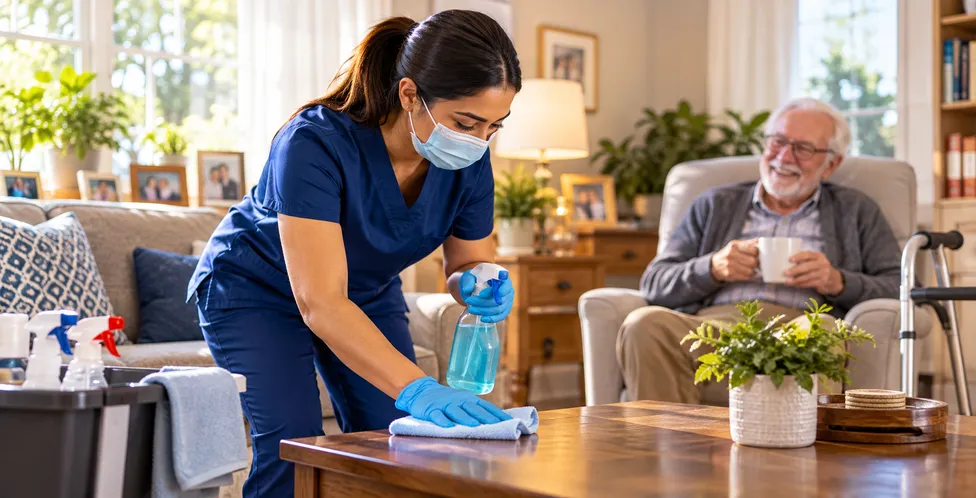








Aging parent at home
Missed meals, forgotten medications, daily tasks becoming harder. A caregiver brings the right support — without taking away independence.
A trained caregiver steps into your routine, so you can take an afternoon or a day off without leaving your loved one alone.
4.9 (250+ Reviews)


98% Client satisfaction
Caring for a parent or a spouse rarely begins as a decision. It begins with one extra errand, then a night of broken sleep, then a calendar with nothing on it that belongs to you. A year later you are the person who knows which pills go in the Tuesday slot, which chair is safe to stand up from, and how much warning your mother needs before a shower.
Most family caregivers who call us have not had a full day to themselves in months. Dentist appointments get cancelled. Friends stop being answered. There is guilt about wanting an afternoon alone, and more guilt about saying it out loud.
Respite care answers that specific problem: a trained caregiver from Good Hands Home Health Care comes into the home, takes over the routine you have built, and gives you room to rest before something breaks. Your loved one stays in their own home and keeps their own routine — the caregiver works to that routine instead of replacing it.


When you need care day and night, we're there!




From aging at home to recovery and long-term conditions, every family's situation is different. We listen first, then build care that fits.
Missed meals, forgotten medications, daily tasks becoming harder. A caregiver brings the right support — without taking away independence.


Healing at home shouldn't feel overwhelming. Hands-on help with mobility, routines, and daily care makes the return smoother for everyone.


Chronic illness or memory changes don't have to mean leaving home. Consistent in-home support keeps comfort, dignity, and connection close.


A respite caregiver from Good Hands Home Health Care picks up the daily work you have been carrying, following the same order and the same habits your loved one is used to. During an initial assessment we write down the details that matter: how she likes her coffee, which side of the bed he gets out of, what time the afternoon nap usually starts.
Personal Care — hygiene, bathing, dressing and grooming.
Mobility & Transfers — safe assistance moving around the home.
Meals & Medication — meal preparation, help with eating, medication reminders.
Household Support — light housekeeping, laundry, grocery shopping and errands.
Companionship — conversation, escort to medical appointments, support settling back home after a hospital stay.
Anything outside this list gets discussed during the assessment so that expectations are clear before the first shift.
Good Hands Home Health Care has served Pennsylvania families for more than eight years and holds accreditation from the Accreditation Commission for Health Care, alongside membership in the Pennsylvania Homecare Association.
Every one of our 120-plus caregivers clears a rigorous screening process before entering a client’s home, including a criminal background investigation and a psychological evaluation. That screening matters most when you are handing over the house keys to someone new for a weekend.
Who Benefits from Respite Care
Family caregivers who have gone months without a full day off.
Spouses and adult children losing sleep to overnight caregiving duty.
Families planning travel or recovering from their own surgery.
Families living with dementia who need experienced, consistent cover.
Behind each caregiver stands a team that supervises the care, revises the plan when needs shift, and provides backup coverage when a caregiver cannot make a shift. Your break does not end because someone called in sick.


Our experienced team handles every detail—from the initial consultation to ongoing support—so your family can focus on what matters most.

You tell us what is happening at home and when you need cover. We confirm availability for those dates.
Our team visits the home and reviews your loved one’s condition, daily routine, level of independence and the support required. This is also where the schedule and the quote are settled.
We select a caregiver suited to the needs, the schedule and the personality involved, rather than assigning whoever is free.
Care begins at home under supervision, with the plan adjusted as needs change and backup coverage arranged if your caregiver is ever unavailable.







630 Freedom Business Center Dr., 3rd Floor
King of Prussia, PA 19406
Phone Number: 610-285-1095
info@goodhandshomecarellc.com
Mon - Fri: 9AM to 5PM EST
Sat - Sun: On-Call Only
Families across Pennsylvania trust us with the care of the people they love most. Read real reviews from our clients, their families, and the caregivers who make our home health care possible.

Great home care agency. I highly recommend it.


Great service.

Great place to work. I highly recommend it.

Very professional and friendly home care agency. Great place to work. I would recommend this company.
Every member of our team is carefully selected, professionally trained, and committed to providing dependable, respectful care that helps your loved ones feel safe, comfortable, and supported every day.





We're proud to provide trusted in-home care across 14 Pennsylvania counties. Whether you're visiting our office or looking for a home nurse near you, our team is here to help every step of the way.
630 Freedom Business Center Dr., 3rd Floor
King of Prussia, PA 19406
Phone Number: 610-285-1095
info@goodhandshomecarellc.com
Mon - Fri: 9AM to 5PM EST
Sat - Sun: On-Call Only
Respite care is short-term, in-home care that temporarily replaces the support a family caregiver provides, covering personal care, meals, housekeeping and companionship for an agreed number of hours so the caregiver can rest, work or travel.
The tasks are largely the same. Respite care is defined by its purpose and its length: it is arranged to give the family caregiver a break, for a set period, with an end date already agreed. Regular home care is ongoing support with no planned finish.
Medicare does not cover non-medical respite care at home in the general case. The one exception is respite under the Medicare hospice benefit, which pays for short inpatient stays for patients already enrolled in hospice. Most families cover in-home respite privately, through long-term care insurance, through VA benefits, or through Pennsylvania’s Medicaid Waiver and Community HealthChoices programs.
Yes. One-off bookings are common, including single weekends, holidays and short trips. We recommend a short introductory visit beforehand so the caregiver and your loved one have already met.
Yes. Overnight cover is one of the most requested arrangements, particularly for families dealing with night-time wandering or frequent waking. Longer bookings use rotating shifts so the caregiver on duty is always alert.
It depends on the dates and the level of care. Contact us with the days you need covered and we will confirm availability, then schedule the free in-home assessment. Planned respite around a trip or a surgery is easiest to arrange with a few weeks’ notice.
Where the schedule allows, yes, and for clients with dementia we treat it as a priority. Familiarity reduces resistance and makes each visit easier for everyone.
This comes up in most first conversations. We usually start with a short daytime visit while you are still in the house, so the introduction happens on your loved one’s terms. Caregivers are matched on temperament as well as on skills, and if the fit is wrong we replace the caregiver rather than asking the family to adapt.



Respite care is short-term, in-home care that temporarily replaces the support a family caregiver provides. A trained caregiver covers personal care, meals, light housekeeping and companionship for an agreed number of hours, so the primary caregiver can sleep, work, travel or attend to their own health. It can be booked once or repeated on a schedule.
The difference from ongoing home care lies in purpose rather than in the tasks themselves. Respite care is measured in the break it gives the family. Nothing about the arrangement is permanent, and many families use it a few times before deciding whether they want regular support.
| Care Type | Purpose | Duration |
|---|---|---|
| Respite Care | Temporary relief for the family caregiver | Set period with an agreed end date |
| Ongoing Home Care | Continuous daily support for the client | Open-ended, no planned finish |
Your loved one stays in their own home and keeps their own routine in both cases. With respite care, the caregiver works to the routine the family has already built instead of replacing it.
Families need very different amounts of relief, and the schedule is built around what is actually running out. Some need a predictable window every week. Others need one uninterrupted stretch before they collapse.
The most common arrangement. A caregiver covers the same block each week so you can keep a standing appointment, work a shift, see people, or simply sit somewhere quiet. Regular short visits also let your loved one grow familiar with the caregiver before any longer booking.
Nights are where most caregivers lose ground. Broken sleep across weeks turns into a health problem of its own, and weekends bring no relief when you are the only one on duty. Overnight respite puts a caregiver in the home while you sleep through the night in your own bed. Weekend cover works the same way for families who need two consecutive days back.
Longer bookings cover a wedding out of state, a delayed vacation, a work trip, or your own surgery and recovery. Care runs continuously across several days or weeks, with caregivers working in rotating shifts so someone alert is always present.
Dementia changes what a break even means. You cannot leave the house for twenty minutes if the front door has become a risk. You answer the same question fourteen times before lunch and hear yourself getting short. Evenings bring agitation that arrives on schedule and drains whatever the day left. Sleep goes first, because someone has to hear the footsteps at 3 a.m.
Then there is the fear that stops most families from calling anyone at all: she will refuse a stranger in her house.
We plan around that. Caregivers experienced with cognitive decline are matched to temperament as well as to schedule, and we introduce them gradually, often starting with a short daytime visit while you are still at home. Where families book repeat respite, we keep the same caregiver on the assignment, so each visit starts from recognition instead of from scratch. Wandering risk, sundowning patterns and repetitive questioning are all covered in the care plan, along with the phrasing and routines that already work in your household.
Wanting rest does not mean you have stopped caring. Caregivers who sleep are the ones who can keep going.
Respite care is billed by the hour, and no honest agency can quote a rate before seeing the situation. What moves the number is straightforward: the level of care required, how many hours you book, whether cover falls on weekdays, weekends or overnight, and whether the schedule is one-off or recurring.
The hourly rate covers the caregiver’s time, the supervision behind them, the written care plan, and backup coverage. There is no separate charge for the assessment visit or for building the plan.
Families in Pennsylvania usually pay through one of the following:
Medicare does not pay for non-medical respite care in the general case. The exception is respite provided under the Medicare hospice benefit, which covers short inpatient stays for patients already enrolled in hospice.
To get an exact figure, schedule the free in-home assessment. You will leave that visit with a written scope and a rate, with no obligation attached.
Respite care often runs alongside other support, and many families move from one to the other as needs grow.